Chipotle Mexican Grill Menu Nutrition Information
Chipotle Mexican Grill menu nutrition means that the same base order can yield very different calories, macros, and sodium depending on how you build it. The short answer: customize freely, but expect wide variation and often high sodium unless you pick wisely.
This guide is a practical buyer’s guide for U.S. shoppers standing at the line. It focuses on real choices you make: rice, beans, salsas, cheese, sour cream, guacamole, queso, tortilla, and portions.
Watch for two main gotchas: calorie stacking from add-ons and sodium that climbs fast with common toppings. Use the chain’s online calculator and filters to compare items before you order.
The article previews: tools first, then healthy vs. not, and a format-by-format breakdown of bowls, burritos, tacos, salads, sides, and drinks. It will include concrete calorie and sodium examples so you can order with confidence.
How to Use Chipotle’s Menu Nutrition Tools to Build a Smarter Order
Start by picking the base format — bowl, burrito, tacos, or salad — because that choice shifts totals quickly.
Use the online nutrition calculator before you step up to the line. Select each ingredient to see exact calories, macros, and sodium for your custom build.
Run quick “what-if” swaps: light rice, skip queso, switch tortilla, or ask dressing on the side. Each swap updates totals instantly. That helps you compare real options, not averages.
Practical tips to speed decisions
- Choose format first — the base sets the math.
- Decide must-haves (protein + salsa) vs. nice-to-haves (cheese, guac).
- If you’re looking for more protein, add beans and fajita veggies.
| Tool | What it shows | Quick use |
|---|---|---|
| Filter labels | “Healthy and tasty” indicators | Good starting filter; still check sodium |
| Nutrition calculator | Calories, macros, sodium for custom builds | Compare swaps to match your diet |
| Online builder | Full ingredient list and totals | Save combos you like |
Remember: customization is the advantage — and chipotle offers the tools to turn that flexibility into a smarter plan. The two levers to watch next are sodium and portion size.
Chipotle Mexican Grill Menu Nutrition: What’s Typically “Healthy” vs “Not”
Understanding which ingredient stacks drive calories and salt helps you order with confidence.
Why sodium sneaks up fast
Sodium is the common surprise: even fresh-tasting builds spike when you add rice, beans, multiple salsas, and salty toppings. That pattern raises totals more than you expect.
Portion rules that change totals
- Ask for light rice to cut carbs and salt.
- Request dressing or queso on the side to control portions.
- Split tortilla chips — the bag is effectively shareable.
Most and least nutritious patterns
Typically healthy builds lean on veggies and beans with one or two salsas for flavor. That keeps volume high and calories lower.
Limit builds that pile monterey jack cheese, sour cream, queso, guacamole, and double rice. Those toppings push totals toward a weight-management problem.
| Pattern | Typical Advantage | Main Items | When to use |
|---|---|---|---|
| Most nutritious | Lower calories, more fiber | Fajita veggies, beans, salsa | Daily meals, weight goals |
| Moderate | Balanced flavor, moderate salt | Protein + veggies + 1 salsa | Regular lunches |
| Least nutritious | High calories & sodium | Jack cheese, sour cream, queso, guacamole, double rice | Occasional treat |
Quick shortcut: pick protein and beans first, add fajita veggies and salsa, then choose one rich topping if you want it. Bowls often make this easier to control.
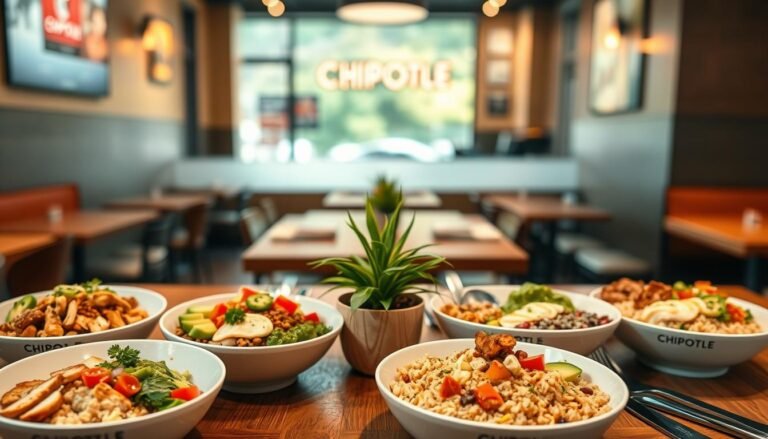
Burrito Bowls and Protein Bowls: Best Nutrition Value for Customizing
Bowls let you keep the same fillings while dropping the big flour tortilla. That removes automatic calories and gives you portion control.
Lower-calorie bowl template
Copy this: sofritas + pinto beans + fajita veggies + tomato green-chili salsa + romaine.
It totals about 320 calories and 1,180 mg sodium. This protein bowl feels full but stays light.
Watch-list, higher-calorie build
Be cautious with: carnitas + white rice + black beans + fajita veggies + fresh tomato salsa + guacamole + Monterey Jack cheese + sour cream + queso.
That stacks to roughly 1,165 calories and 2,550 mg sodium — a clear cautionary example.
Rice, beans, and salsa choices
- Rice: brown rice for fiber, white rice for softer texture, or skip rice. Ask for light rice to cut calories.
- Beans: pinto beans and black beans add fiber and protein and pair well with fajita veggies for bulk.
- Salsa: fresh tomato salsa for bright fresh tomato flavor, tomatillo salsas for tang, roasted chili-corn for sweetness — note sodium varies by choice.
| Item | Calories | Sodium |
|---|---|---|
| Lower-calorie protein bowl | 320 | 1,180 mg |
| Watch-list bowl | 1,165 | 2,550 mg |
Quick ladder: start with protein (sofritas or meat), add beans, add fajita veggies, choose one salsa, and only then pick rich toppings like guacamole or monterey jack cheese based on your goals and options.
Burritos and Tortillas: When a Soft Flour Tortilla Changes the Nutrition Math
When wrapped in a soft flour tortilla, the same fillings can look and feel like a much bigger meal. The flour tortilla makes it easy to eat every scoop at once, which often raises totals above a bowl.
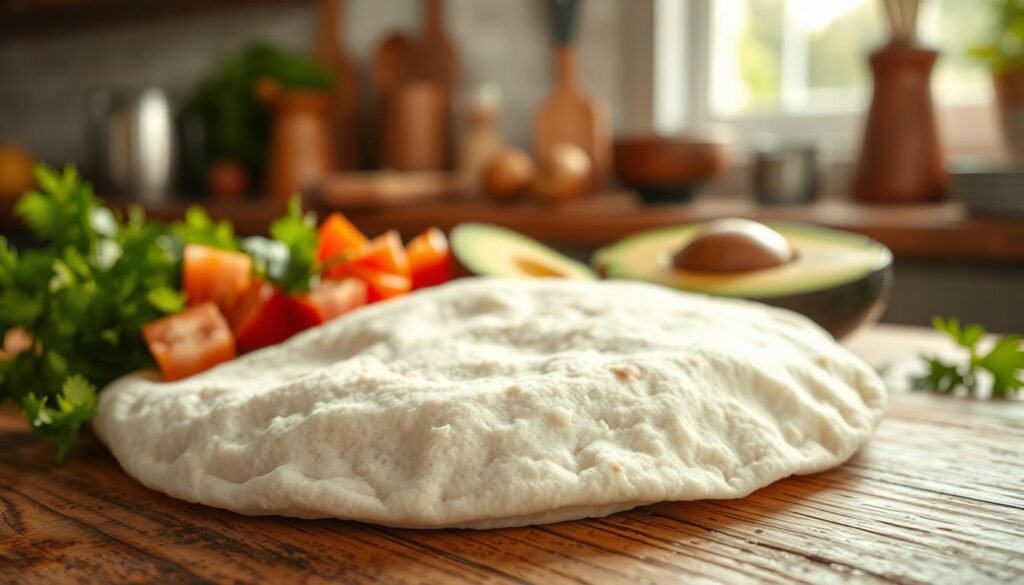
Why burritos change the math: a filled tortilla invites finishing the whole build. That single wrap also adds calories and carbs you won’t get in a bowl.
Lighter burrito example
Chicken + fajita veggies + fresh tomato salsa + romaine. This practical default totals about 550 calories and 1,610 mg sodium. Fajita veggies and fresh tomato salsa add texture and flavor without relying on rich toppings.
Calorie‑dense burrito to limit
Steak + white rice + black beans + queso + fajita veggies + sour cream + Monterey Jack cheese + guacamole stacks to roughly 1,430 calories and 2,980 mg sodium. White rice, black beans, queso, and Monterrey Jack cheese pile calories and salt fast.
- Buyer’s tip: save half for later — splitting the burrito is the easiest calorie control.
- If you won’t split it, ask for light rice, light cheese, or sauce on the side and keep salsa for flavor.
- Pick one rich add-on (guacamole OR queso OR extra cheese) and keep fajita veggies as the flavor base.
| Item | Calories | Sodium |
|---|---|---|
| Lighter burrito build | 550 | 1,610 mg |
| Calorie-dense burrito | 1,430 | 2,980 mg |
Goal: control, not restriction. Prioritize protein, veggies, and salsa first when you order, and treat rich toppings as occasional extras. Next up: tacos as a more portion-controlled tortilla option.
Tacos: Crispy Corn Tortilla vs Flour Tortilla Nutrition Tradeoffs
Tacos can be a smart, portion-friendly choice when you pick the right shell and toppings. Each shell type changes how calories add up and how easy it is to control portions. Read these quick contrasts to order with confidence.
Why crispy corn shells often keep calories lower
Crispy corn tortilla tacos are defined portions. Each taco is smaller and fills you without heavy add-ons. A single crispy corn taco with black beans, fajita veggies, fresh tomato salsa, light monterey jack cheese, romaine, and light sour cream is about 164 calories.
That gives a clear anchor: roughly 490 calories for three tacos. It’s an easy target when you want volume and flavor without excess.
How flour tortilla tacos can stack up fast
Flour tortilla tacos hold more. Add carnitas, white rice, roasted chili-corn salsa, monterey jack cheese, guacamole, and sour cream and one taco jumps to about 401 calories. Three of those can total ~1,200 calories.
Salsa choice matters: fresh or tomatillo styles keep sodium lower, while roasted chili-corn and corn salsa add sweetness and extra salt.
- Flavor-forward, lighter pattern: beans + fajita veggies + salsa + light monterey jack keeps tacos satisfying.
- Two-taco + side: try two tacos with a lighter side for balance instead of three heavy tacos.
- Simple rule for flour: pick one rich topping (guacamole or sour cream) and keep the rest salsa, beans, and veggies.
| Item | Calories (approx.) | Suggested strategy |
|---|---|---|
| Crispy corn taco (black beans + veggies) | 164 | Portion control; low-to-moderate sodium |
| Flour tortilla taco (carnitas + rice + guac) | 401 | Pick one rich add-on; consider two instead of three |
| Three crispy corn tacos | ~490 | Meal-ready, lighter choice |
Next: salads can seem light, but dressing choices change the math—so choose dressings carefully when you switch to a salad-based meal.
Salads and the Honey Vinaigrette Dressing Trap
Salads can seem like a safe choice, but a single dressing can flip that script fast. A hearty base of greens is filling, yet add one serving of honey vinaigrette and totals jump by 220 calories.
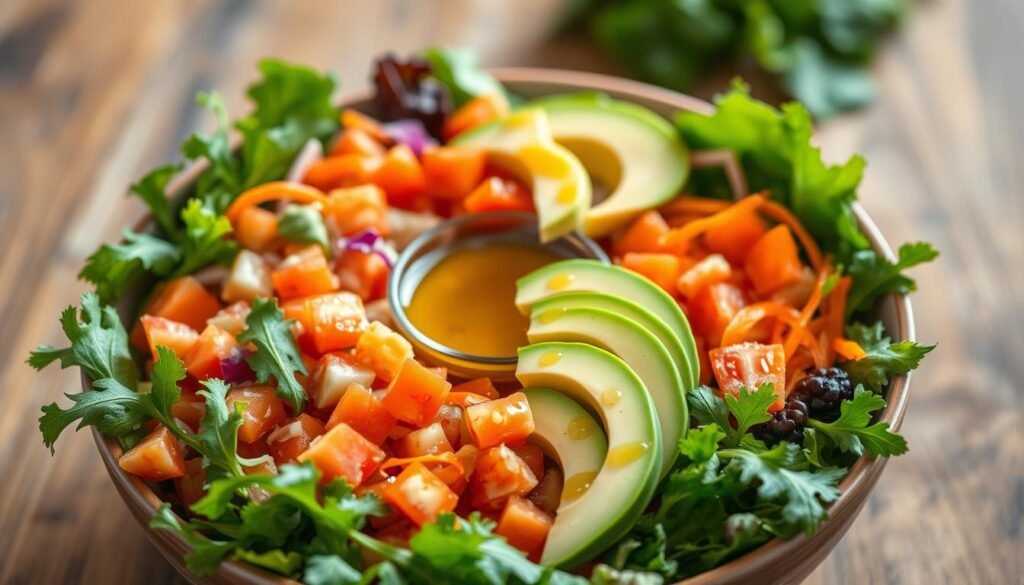
Use salsa as a light dressing and build smart
For better calorie control, treat salsa as your dressing. Tomatillo green‑chili salsa is a smart baseline for many goals.
Examples to compare
- Lower‑calorie salad: super greens + pinto beans + fajita veggies + tomatillo green‑chili salsa + light monterey jack — 235 calories; 730 mg sodium.
- Higher‑calorie trap: super greens + chicken + rice + black beans + fajita veggies + fresh tomato salsa + roasted chili‑corn salsa + monterey jack cheese + sour cream + honey vinaigrette — 1,100 calories; 2,985 mg sodium.
Practical ordering tips
- Get vinaigrette dressing on the side and dip your fork, or skip it and use tomato salsa for brightness.
- Follow this simple formula: super greens + protein or pinto beans + fajita veggies + one salsa + optional light monterey jack.
| Item | Calories | Sodium |
|---|---|---|
| Lower‑calorie salad | 235 | 730 mg |
| Higher‑calorie salad | 1,100 | 2,985 mg |
Remember: salads can fit a diet goal when built deliberately. Next, watch how sides and drinks can quietly double your totals.
Sides and Drinks: Chips, Tortilla Chips + Queso, and Bottled Juice Calories
A single bag of tortilla chips or a bottled juice can change your daily calorie math. Keep portions real so extras don’t undo a carefully built meal.
Portion reality and common pairings
Make portions real: one bag of tortilla chips is about 540 calories and meant to be shared. That makes “shareable” a practical tip, not marketing.
Compare common pairings: chips + tomato green-chili salsa totals ~560 calories, while chips + queso rises to ~780 calories. Adding guacamole pushes calories and saturated fat further and raises sodium too.
Smart-side playbook
- Split the bag or order a few bites of dip so sides don’t overtake your meal.
- Choose chips + salsa for a lower-calorie option; pick queso sparingly.
- Skip chips if you already chose rich toppings in your main.
Drinks: water vs juice
Water is the best default — zero calories and no sugar to hide in your order.
A bottle of pineapple orange banana (Nantucket Nectars-style) orange banana juice runs about 280 calories. That can fit after a workout, but it will push weight goals if added to a full lunch.
| Item | Calories | When to choose |
|---|---|---|
| Tortilla chips (bag) | 540 | Shareable side |
| Chips + tomato green-chili salsa | ~560 | Lower-calorie pairing |
| Chips + queso | ~780 | Occasional treat |
| Pineapple orange banana juice (bottle) | ~280 | Post-workout or planned treat |
Bottom line: control the extras — chips, queso, and sugary drinks — and the rest of your meal becomes much easier to manage.
Conclusion
A few clear rules make it easy to build flavorful, repeatable meals that fit your goals.
Pick the format first — bowls or a burrito bowl give the most control. Choose protein, then beans and veggies, and use salsa for big flavor with low cost in calories.
Keep rice portions small and add rich toppings like queso, monterey jack cheese, or guacamole intentionally. Sides and chips are the fastest way calories and sodium climb.
Quick checklist for your next order: one salsa (fresh tomato salsa or tomato salsa), one bean (black beans), one splurge (guacamole), and one practical swap (light rice, dressing on the side, or split chips).
Use the online calculator and pick options that match the diet you’re looking for. The best nutrition outcome is one you can repeat and enjoy.