Cracker Barrel Menu with Calories & Nutrition Facts
Looking for a simple way to order from the cracker barrel menu with confidence? This guide gives you quick calorie totals and key nutrition facts so you can plan a meal fast.
The article is organized by breakfast, entrées, seafood, soups and salad, sides, breads, dressings, desserts, drinks, and kid’s menu. You can jump to the section you want and compare items side by side.
Prices change by location, so the focus here is on calories and practical swaps, not exact cost. “Per order,” “per bowl,” “per cup,” “per slice,” and “per piece” describe how an item is served so you don’t undercount your intake.
Watch for hidden calorie culprits like syrup, dressing, butter, and gravy. Small add‑ons change daily totals fast.
Example snapshot: Grilled Chicken Tenderloins (230 calories) + Fresh Steamed Broccoli (40 calories) + Mixed Green Side Salad (15 calories). This shows how easy it is to stay intentional.
This buyer’s guide helps you compare items, spot high‑calorie comfort foods, and choose smarter sides while keeping the classic feel. Note that nutrition can change; treat these numbers as planning tools, especially when you customize an order.
How to Use This Cracker Barrel Calories Guide to Order with Confidence
Know how servings are listed and you’ll build meals that match your goals without guesswork. Start by reading each serving label: per order, per piece, or per slice.
Per order means a plated entrée or side. Per piece is used for items like fried fish. Per slice applies to toast or pie. Track each label so your totals are accurate.
- Pieces can mislead—Fish Fry Cod Fillets, 4 pieces = 730 calories, while Haddock, 1 piece = 760 calories. Portion format matters more than the name.
- Soups: Chicken Noodle Soup is 100 calories per cup and 210 per bowl—choose cup servings to save calories and eat more veggies first for fullness.
- Toppings audit: treat butter, syrup, and dressing like sides. Real Butter order = 35; Real Butter scoop = 110. Those add up fast.
Simple build method: pick a main, choose two sides, then add bread or a topping. For breakfast, swap to Two Scrambled Egg Whites or sugar‑free syrup. For lunch and dinner, swap fried for grilled or opt for broth soups.
| Item | Serving | Calories | Notes |
|---|---|---|---|
| Fish Fry – Cod Fillets | 4 pieces | 730 | High portion density |
| Fish Fry – Haddock Fillet | 1 piece | 760 | Single piece, more dense |
| Chicken Noodle Soup | Cup / Bowl | 100 / 210 | Choose cup for lighter option |
| Real Butter | Order / Scoop | 35 / 110 | Treat as side when added |
Value tip: Spend your allowance on the one dish you love and keep sides light. You can still enjoy comfort food and stay under 1,000 total by pairing one rich item with lighter sides and vegetables.
cracker barrel menu calories: Quick-Glance Highlights by Calorie Range
This quick snapshot helps you spot low, mid, and high energy dishes at a glance.
Lowest-calorie picks to start with
Unsweet Tea — 0 calories, Mixed Green Side Salad — 15 calories, and Fresh Steamed Broccoli — 40 calories are the easiest ways to add volume without adding much energy.
Use them to fill up before a main or to swap heavier sides for balance.
Mid-range comfort foods that still fit a balanced day
Meatloaf — 520 calories sits in the mid-range. Pair it with steamed vegetables and skip extra butter or gravy to keep the meal sensible.
Highest-calorie items to split, swap, or plan around
Big comfort plates like Pecan Pancakes — 1020 calories and Homestyle Chicken — 1350 calories are best shared or ordered with lighter sides. Country Fried Shrimp — 770 calories is a mid-to-high option; pick one fried item and keep the rest light.
- If you want crunchy/fried → choose one fried item and keep sides light.
- If you want sweet breakfast → pick a single syrup approach or sugar-free syrup.
- If you want a hearty dinner → skip bread and choose vegetables.
Value tip: Higher-energy items can be worth it when split or saved for later. Prioritize the dish you love and trim extras to keep satisfaction without overshooting your target.
| Item | Serving | Calories | Quick Note |
|---|---|---|---|
| Mixed Green Side Salad | 1 order | 15 | Low-volume filler, good with dressings on side |
| Fresh Steamed Broccoli | 1 order | 40 | Vegetable swap for heavier sides |
| Meatloaf | 1 order | 520 | Mid-range, pair with veggies |
| Pecan Pancakes | 3 pancakes | 1020 | High; split or plan as treat |
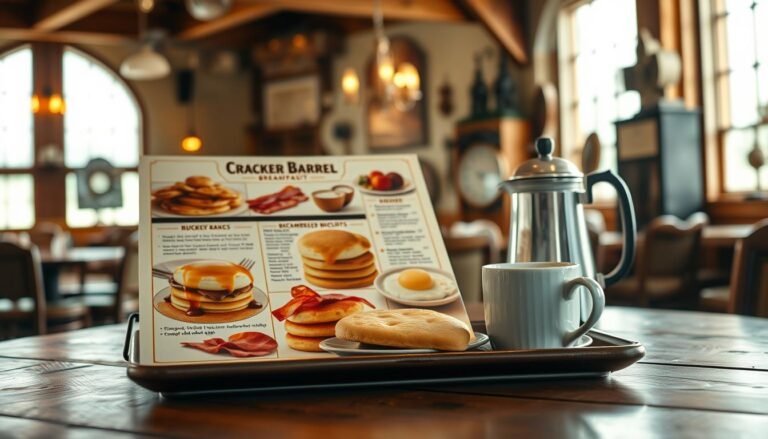
Breakfast Calories at Cracker Barrel: Eggs, Pancakes, French Toast, and Morning Combos
Use this compact guide to compare common morning plates and make choices that match your appetite. The quick numbers let you swap items to save energy or indulge without surprise.
Egg basics and lighter starts
Two Eggs (2 eggs) — 150 calories. Two Scrambled Egg Whites — 60 calories.
Swap tip: Choosing egg whites frees up room for toast, a side of fruit, or grits while keeping protein high.
Pancake plates and toppings
Buttermilk Pancakes with 100% Pure Natural Syrup (3 pancakes) — 630 calories. Wild Maine Blueberry Pancakes — 650 calories. Pecan Pancakes — 1020 calories.
Syrup strategy: Full syrup adds about 150 calories per order; choose Sugar Free Syrup (15 calories) to keep the ritual with far less sugar.
French toast and morning splurges
French Toast (4 slices) — 750 calories. Momma’s French Toast Breakfast — 900 calories. These are best shared or paired with zero-cal drinks and light sides.
Sandwiches, toast classics, and samplers
Egg Sandwich (Two Eggs on Sourdough with tomato & mayo) — 480 calories. Eggs-in-the-Basket (Sourdough + Two Eggs) — 430 calories.
Sunrise Sampler — 910 calories; Country Boy Breakfast — 670 calories; Double Meat Breakfast — 720 calories. Samplers deliver value but require planning if you’re tracking totals.
| Item | Serving | Calories |
|---|---|---|
| Two Eggs | 2 eggs | 150 |
| Two Scrambled Egg Whites | 2 egg whites | 60 |
| Buttermilk Pancakes + Syrup | 3 pancakes | 630 |
| Pecan Pancakes | 3 pancakes | 1020 |
Quick balance tips: Pair a richer entrée with unsweet tea or water, skip extra butter, and choose fruit or steamed veggies as sides to control overall intake.
Chicken and Meat Entrées for Lunch Dinner: Calories, Value, and Best Swaps
Start your main course plan by choosing whether you want grilled or fried protein. Pick the protein style first, then build sides that keep the whole plate in range.
Grilled vs fried reality check
Grilled chicken tenderloins (6 tenders) are 230 calories. The same 6 tenders, when fried, jump to 540 calories. That single swap frees a lot of room for sides and dessert.
Comfort plates and what to plan around
Favorites like Chicken & Dumplings (450), Meatloaf (520), Chicken Fried Chicken (590), and Country Fried Steak (600) satisfy but climb fast with gravy and heavy sides.
Beef, steak, and pork choices
Pick by appetite: Sirloin Steak (400) fits lighter, Rib Eye Steak (650) is richer. Hamburger Steak is 440 and Roast Beef is 480. For pork, Grilled Country Pork Chops (2 chops) are 490; Hickory-Smoked Country Ham is a lower 270.
- Best swaps: choose grilled chicken, two veggie sides, and a zero-cal drink.
- Split heavy entrées for better value and portion control.
| Item | Serving | Calories | Notes |
|---|---|---|---|
| Grilled Chicken Tenderloins | 6 tenders | 230 | Lean choice, good with veggies |
| Fried Chicken Tenderloins | 6 tenders | 540 | Higher fat; split or skip bread |
| Chicken & Dumplings | 1 order | 450 | Comforting, add steamed veg |
| Rib Eye Steak | 10 oz | 650 | Hearty; pair with greens |
| Grilled Country Pork Chops | 2 chops | 490 | Hearty pork option |
Value note: A single rich entrée can be worth it when shared. Use the simple template—1 entrée + 2 veggie sides + zero-cal drink—to stay satisfied without overshooting.
Seafood Choices: Catfish, Cod, Trout, and Shrimp Calories
From grilled fillets to fried baskets, seafood gives clear low‑versus‑high options. Pick the cooking style first, then add sides that match your target.
Fish fry favorites
Fish Fry – Cod Fillets: 4 pieces — 730. Fish Fry – Haddock Fillet: 1 piece — 760. Read the serving unit; pieces vs. single fillet changes totals a lot.
Catfish comparisons
Grilled Catfish Fillet: 1 order — 130. Fried Catfish Fillet: 1 order — 370. These catfish options let you choose light or hearty without changing the plate concept.
Lighter and splurge picks
Lemon Pepper Grilled Rainbow Trout: 2 fillets — 330. This is a balanced, flavor‑forward choice that pairs well with steamed veggies.
Country Fried Shrimp: 1 order — 770. Treat this as a splurge and pair with minimal sauces and lighter sides.
- Tip: If you pick fried seafood, consider splitting the entrée or boxing half right away to protect daily totals.
- Watch sauces: Tartar and cocktail sauces can raise your total quickly—ask for them on the side.
| Item | Serving | Calories |
|---|---|---|
| Cod Fillets (Fish Fry) | 4 pieces | 730 |
| Haddock Fillet (Fish Fry) | 1 piece | 760 |
| Grilled Catfish Fillet | 1 order | 130 |
| Fried Catfish Fillet | 1 order | 370 |
Soups and Salads: Building a Filling Meal with Smarter Calories
Soups and salads let you build a filling plate while keeping nutrition and portion in your control. Cups and bowls change totals a lot, so size choices matter more than the name of the dish.
Size matters: cup vs. bowl examples
Pick a cup when you want warmth and volume without a big energy hit. For example, Chicken Noodle is 100 per cup and 210 per bowl. Beef & Noodle runs 140 per cup versus 290 per bowl. Vegetable Soup is 80 per cup and 170 per bowl.
Comfort soups to plan around
Some soups behave like mains. Clam Chowder (440 cup / 880 bowl) and Tortilla Soup (300 cup / 600 bowl) can quickly become the meal. Chili is filling at 190 per cup and 390 per bowl; toppings and sides change the final number.
Salad entrées and dressing impact
Country Chef Salad and Grilled Chicken Salad are about 620 each. A Fried Chicken Salad jumps to 820, while a Southern Grilled Chicken Caesar is 640. Treat dressing as its own line item—creamy dressings add a lot.
- Smart build: cup of soup + side salad or greens keeps volume high and totals moderate.
- Choose grilled protein or skip heavy dressings to stay satisfied without overdoing it.
| Item | Serving | Calories |
|---|---|---|
| Chicken Noodle Soup | Cup / Bowl | 100 / 210 |
| Clam Chowder | Cup / Bowl | 440 / 880 |
| Grilled Chicken Salad | 1 order | 620 |
| Fried Chicken Salad | 1 order | 820 |
Sides and Veggies: Lower-Calorie Add-Ons That Still Feel Like Cracker Barrel Food
Small side swaps let you keep the comfort while trimming excess energy. Sides are where diners often double a meal’s totals. This short guide helps you keep the classic flavors without overshooting.
Veggies under ~100
Choose two vegetable sides with any entrée for volume and balance. Go-to picks include:
- Mixed Green Side Salad — 15 calories
- Fresh Steamed Broccoli — 40 calories
- Country Green Beans — 60 calories
- Sweet Whole Baby Carrots — 80 calories
- Turnip Greens — 100 calories
Comfort sides and casserole reality
Casserole and comfort sides add flavor fast. Hashbrown Casserole is 190, Loaded Hashbrown Casserole is 350, and Loaded Hashbrown Casserole Tots jump to 610.
Macaroni & Cheese (270) pairs well with a veggie to balance richness.
Potato picks and Southern staples
Mashed Potatoes — 200 vs Baked Sweet Potato w/ Butter & Brown Sugar — 350 vs Baked Potato w/ Butter & Sour Cream — 470. Toppings drive the spread.
Also consider Fried Apples (170), Dumplins (250), and Corn Bread Dressing (310). Beans & Greens (410) and Pinto Beans (470) act like mini‑entrées—plan accordingly.
| Item | Serving | Calories |
|---|---|---|
| Fresh Steamed Broccoli | 1 order | 40 |
| Hashbrown Casserole | 1 side order | 190 |
| Macaroni & Cheese | 1 order | 270 |
| Baked Potato w/ Butter & Sour Cream | 1 order | 470 |
| Beans & Greens | 1 order | 410 |
Best swaps: If you pick a fried entrée, choose two veggie sides. If you pick mac and cheese, add broccoli or green beans as the second side to keep the plate satisfying and sensible.
Breads, Toast, and Breakfast Add-Ons: Biscuit, Toast, Muffins, Bacon, and Sausage Calories
Small breakfast choices add up fast—know which breads and add‑ons will raise your plate totals.
Toast and bread swaps are the easiest wins. White Bread Toast is the lightest at 70, Multigrain Toast is 100, Sourdough Toast is 110, and an English Muffin runs 130.
Biscuit orders climb quickly. A plain biscuit is 160 while Sausage & Biscuit hits 260. A Gravy & Biscuits plate (3 biscuits) can reach 710, so treat gravy items as plan‑around orders and pair them with egg whites or veggies.
Proteins and add‑ons matter. Thick‑Sliced Bacon (3 slices) = 200. Turkey Sausage (2 patties) = 110. Smoked Sausage (2 patties) = 210. Link Sausage (3 links) = 210. Adding both bacon and sausage stacks fast.
Bakery items behave like dessert. A Corn Muffin is 210 and a Wild Maine Blueberry Muffin is 360—consider splitting one to save energy and avoid extra sugar in drinks like sweetened milk or juice.
| Item | Calories | Notes |
|---|---|---|
| White Bread Toast (1 slice) | 70 | Lowest‑calorie toast |
| Biscuit (1) | 160 | Keep plain to save |
| Thick‑Sliced Bacon (3) | 200 | High fat; consider turkey |
| Wild Maine Blueberry Muffin | 360 | Split to cut the hit |
Dressings, Sauces, and Butter: Hidden Calories in Toppings and Dips
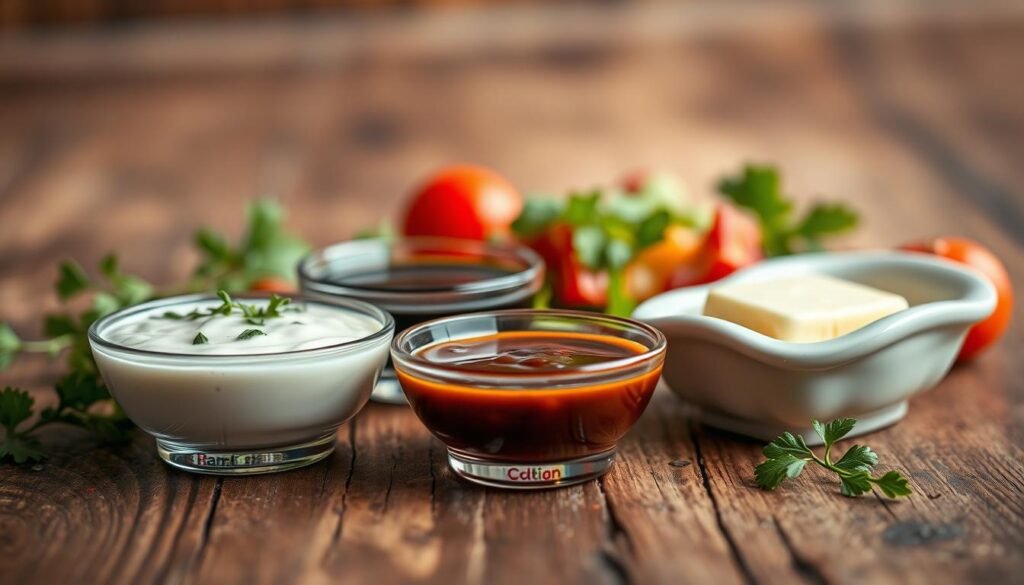
Tiny add-ons—dressings, sauces, and pats of butter—often hide the most energy on a plate. They are easy to add and easy to forget, so checking nutrition facts before you order pays off.
Salad dressings at a glance
Pick a light option or ask for dressing on the side. Fat‑Free Italian is the lightest option at 15, while creamy picks like Blue Cheese and Honey French are much higher.
Seafood and sandwich extras
For seafood, choose Cocktail Sauce (35) over Tartar Sauce (140) to save energy. For a sandwich or grilled chicken, BBQ and Apple Cider BBQ are moderate options (80 each). Honey Mustard can add as much as a side dish.
- Order dressings on the side and use half first to control portions.
- Watch spreads on toast and biscuits—small butter scoops add up.
| Item | Serving | Calories | Notes |
|---|---|---|---|
| Fat‑Free Italian | 2.5 fl oz | 15 | Lowest dressing choice |
| Balsamic Herb Vinaigrette | 2.5 fl oz | 170 | Moderate, flavorful |
| Buttermilk Ranch | 2.5 fl oz | 240 | Creamy, higher impact |
| Tartar Sauce | 1 fl oz | 140 | Seafood dip—choose wisely |
| Real Butter Scoop | 1 scoop | 110 | Big add‑on for bread or biscuits |
Tip: Small swaps—choosing a light dressing, skipping a butter scoop, or swapping cocktail for tartar—save energy and keep meals balanced.
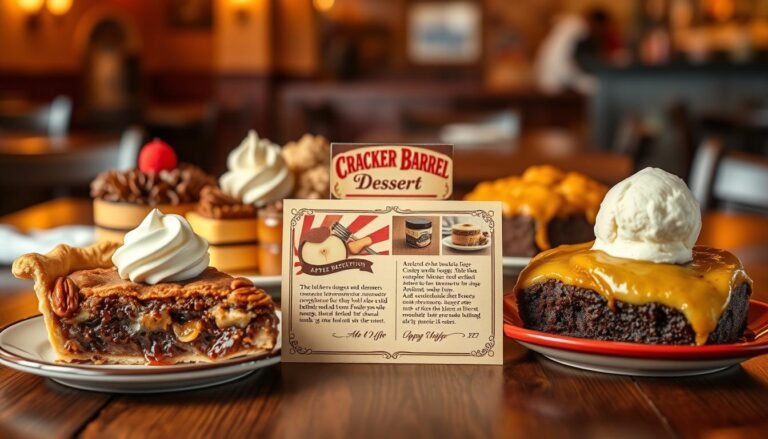
Desserts and Sweet Treats: Pie, Cobbler, Ice Cream, and Fruit Options
A targeted dessert pick can satisfy your sweet tooth while keeping nutrition goals on track.
Classic warm desserts
All American Apple Pie with one scoop of ice cream is 490 calories. Blackberry Cobbler with ice cream is 470. Peach Cobbler with ice cream is 490.
Fruit-forward, lighter sweets
Country Peach with real whipped cream is 320. Sweet Ripe Blackberry with whipped cream is 350. Cinnamon Spiced Apple with whipped cream is 390.
- Optional but doable: Plan dessert as your one intentional splurge for the meal.
- Classic pie and cobbler portions are dense—share or box half right away to save later.
- Sweet tooth strategy: if you already had syrup or a sugary drink, pick a fruit dish with whipped cream to reduce sugar stacking.
- Pair with Unsweet Tea or black coffee to keep drink sugar out of the total.
| Item | Serving | Calories | Allergens |
|---|---|---|---|
| All American Apple Pie + Ice Cream | 1 dessert | 490 | Dairy, Wheat, Apples |
| Blackberry Cobbler + Ice Cream | 1 dessert | 470 | Dairy, Wheat, Fruit |
| Peach Cobbler + Ice Cream | 1 dessert | 490 | Dairy, Wheat, Fruit |
| Country Peach w/ Whipped Cream | 1 order | 320 | Dairy, Fruit |
| Cinnamon Spiced Apple w/ Whipped Cream | 1 order | 390 | Dairy, Wheat, Apples |
Drinks and Coffee Shop Picks: Sweet Tea, Lemonade, Lattes, and Zero-Cal Options
A single sip can change the math of your whole meal—drinks deserve the same planning as entrées.
Tea and lemonade choices
Drinks are the easiest silent sources of extra energy on the Cracker Barrel menu. Choosing wisely protects your breakfast or dinner total.
Sweet Tea is 130 calories per drink. Unsweet Tea is 0, making it the simplest swap to cut sugar fast.
Lemonade varies by size: a typical serving is about 200 calories, while an 8 fl oz portion is roughly 130. Strawberry Lemonade (16 fl oz) runs about 250.
Coffee and café picks
A standard latte is about 100 calories. A vanilla latte jumps to roughly 260 because flavored syrup and added milk increase the total.
Black Regular Ground Coffee and Decaf Ground Coffee (8 fl oz prepared with water) are both 0. They are the best zero-calorie warm options.
Seasonal and pairing tips
The Frozen Mug Apple Cider is a seasonal treat at about 180 calories—great if you skip dessert.
If your entrée is rich, pair it with a zero-cal drink. If your plate is light, you can “spend” on a latte and enjoy the treat.
| Item | Calories | Notes / Allergens |
|---|---|---|
| Sweet Tea | 130 | High sugar; no allergens |
| Unsweet Tea | 0 | Zero sugar; safe for most diets |
| Lemonade (typical) | 200 | High sugar; citrus allergen note |
| Strawberry Lemonade (16 fl oz) | 250 | Higher sugar; fruit components |
| Vanilla Latte | 260 | Contains milk; flavored syrup adds sugar |
Kid’s Menu Calories: Family-Friendly Picks and Lighter Swaps
Parents can use straightforward swaps to keep a kid’s meal balanced and tasty. This short guide compares popular kid entrées, drinks, and treats so you can pick what fits appetite and planning for the day.
Kid’s entrées at a glance
- Grilled Chicken Tenderloins — 3 tenders, 120 calories. A lean, filling swap.
- Fried Chicken Tenderloins — 3 tenders, 270 calories. Crispy but higher in fat.
- Chicken & Dumplings — 1 order, 340 calories. Comfort food portion.
- Macaroni & Cheese — 1 order, 540 calories. Very cheesy and calorie‑dense.

Drinks and treats — simple tradeoffs
Drinks add up fast. Apple Juice and Sweet Tea are about 100 each. Chocolate Milk and Ice Cream (2 scoops) are 230 each. Unsweet Tea is 0 and is a quick way to lower the total.
| Item | Serving | Calories |
|---|---|---|
| Grilled Chicken Tenderloins | 3 tenders | 120 |
| Fried Chicken Tenderloins | 3 tenders | 270 |
| Macaroni & Cheese | 1 order | 540 |
| Ice Cream | 2 scoops | 230 |
Practical tips: If a child wants fried chicken, pair it with unsweet tea or water and a vegetable side. For macaroni & cheese, consider sharing dessert or swapping drink choices to keep the meal balanced. Clear nutrition numbers help you avoid accidental overshoots and still enjoy family food time.
Conclusion
Before you order, pause for a 30‑second routine that keeps your meal intentional and satisfying.
Start with the entrée you truly want. Then control totals by choosing two lighter sides, asking sauces and dressing on the side, and picking a cup of soup if you want less. Grilled over fried and veggie sides over heavy casseroles are repeatable wins.
Cheese and bread add up fast. Sourdough toast is 110 calories, and common cheese slices or 1‑inch blocks (Cheddar, Swiss, Havarti, Gouda) are about 110 each. Two additions can quietly add 220+ to your plate.
Tie it to timing: if breakfast is indulgent, keep lunch light; if dinner is a steak plate, skip sugary drinks or dessert. Bookmark this guide as your quick menu and nutrition reference for road trips and comfort‑food cravings.