Your Panda Express Calories Menu: Nutrition Facts & Prices
Looking for a quick way to see the panda express calories menu and nutrition facts before you order? Short answer: the brand provides online tools that list calorie totals, protein, carbs, fat, sodium, and sugar for full meals so you can plan ahead.
This guide shows what U.S. diners want most: clear counts, practical tips, and smart swaps to meet goals. You’ll get side-by-side comparisons of the most nutritious versus least nutritious choices across appetizers, chicken, beef, seafood, vegetables, sides, desserts, beverages, and kids’ options.
Expect consistent nutrition patterns: prices vary by location, but calorie and sodium trends are reliable enough to guide choices. Watch for hidden sodium and sugar that can rise even when a dish seems light.
The article also covers lower-carb and lower-sodium approaches, allergen notes, and at-a-glance callouts and tables. Use this as a scannable Nutrition Facts & Calories Guide to make faster, confident orders in line or on mobile.
How to Use the Panda Express Nutrition Tools Before You Order
Build your plate online first and watch totals for calories, protein, carbs, fat, sodium, and sugar update in real time.
The nutrition builder works like a cart. Add an entrée, a side, and any extras. The tool then shows a running total for each nutrient so you can see the full meal impact at a glance.
Quick benefits:
- See combined nutrition facts for complete meals, not single items.
- Avoid stacking high-carb sides like fried rice or chow mein on top of a sweet entrée.
- Use the calories filter to narrow items when you need a lighter lunch or a higher-protein dinner.
Check sodium and sugar totals alongside calories. Many fast-casual options can look reasonable by calories but still be very salty or sweet.
| Action | Why it helps | Tip |
|---|---|---|
| Build full meal | Shows true totals for calories, carbs, fat, protein, sodium, sugar | Always add drink and side before judging choices |
| Use calories filter | Quickly limits items to your target range | Filter for nutrition goals like lower-calorie or higher-protein |
| Save combos | Keeps orders consistent with goals | Reuse saved meals when you’re in a hurry |
What “Wok Smart” Means for Calories and Protein
Wok Smart items are short-hand signals on the line for higher protein and modest portions. The label marks dishes that deliver at least 8 grams of protein while staying at 300 calories or less. These simple facts make quick ordering easier when you want a balanced plate.
Choosing a Wok Smart entrée is a practical shortcut if you track protein or follow a tight portion plan. Pick one first, then add vegetables or greens to bulk the meal without large calorie changes.
One key tradeoff: lighter entrées are not always low in sodium. Check the sodium line before committing. Wok Smart supports common diet goals like fat loss, maintenance, and hitting protein targets, but total meal composition still matters.
- Pick a Wok Smart entrée (protein focus).
- Add a vegetable side for volume and fiber.
- Review sodium and sugar in the full meal.
| Item | Protein (g) | Calories | Notes |
|---|---|---|---|
| String Bean Chicken Breast | 17 | 190 | High protein, Wok Smart |
| Grilled Teriyaki Chicken | 16 | 250 | Lean option, watch sauce sodium |
| Mushroom Chicken | 14 | 250 | Veg-forward, Wok Smart friendly |
| Super Greens (side) | 3 | 45 | Volume boost without many calories |
This guide next highlights which categories most often contain Wok Smart-friendly picks and where hidden sugars appear. Use the Wok Smart badge to speed choices at panda express without losing sight of full nutrition facts.
panda express calories menu: Fast Snapshot of Healthiest vs Highest-Calorie Picks
Use this fast snapshot to spot the healthiest and most indulgent choices across entrées, sides, desserts, and drinks. The goal: decide in ten seconds and still know the trade-offs for protein, carbs, and fat.
Most nutritious picks by category (at-a-glance)
Most nutritious here means lower calories, higher protein or fiber, and less added sugar. These choices still may be high in sodium, so check the full nutrition facts when you can.
- Appetizer: Chicken potstickers
- Chicken entrée: String bean chicken breast
- Beef entrée: Broccoli beef
- Shrimp/seafood: Steamed ginger fish
- Side: Super greens
Least nutritious picks by category (at-a-glance)
Least nutritious usually means higher calories and carbs from breading or sugary sauce, more saturated fat, and less fiber.
- Appetizer: Vegetable spring rolls
- Chicken entrée: Orange chicken
- Beef entrée: Beijing beef
- Shrimp/seafood: Honey walnut shrimp
- Side: Chow mein
Key nutrients to watch at this fast-casual spot
Focus on four figures: sodium, sugar, saturated fat, and fiber. These change meal quality even when calorie totals look similar.
Quick pairing tip: if you pick a higher-calorie entrée, choose a vegetable-forward side and skip sweet drinks to keep totals reasonable.
| Category | Best Pick | Worst Pick | Why it matters |
|---|---|---|---|
| Appetizer | Chicken potstickers | Vegetable spring rolls | Less fat, moderate carbs vs fried and salty |
| Chicken | String bean chicken breast | Orange chicken | Higher protein, lower sugar vs crispy and sweet |
| Beef | Broccoli beef | Beijing beef | Veg-forward and lower fat vs saucy and high carbs |
| Seafood & Side | Steamed ginger fish / Super greens | Honey walnut shrimp / Chow mein | Lean protein and fiber vs higher fat, carbs, and sugar |
This snapshot prepares you for the detailed breakdowns ahead, where each category lists exact calories and key macro context you can apply to your own order.
Appetizers Calories and Nutrition: Egg Rolls, Potstickers, Rangoon, and Spring Rolls
Appetizers set the tone — and their starter calories can push a meal past your target before the entrée arrives.
Chicken potstickers are the smarter starter here. At 160 calories, they have 6g fat, 20g carbs, 6g protein, and just 250mg sodium. That balance makes them satisfying without adding too much salt or bulk to the plate.
By contrast, vegetable spring roll options look light but cost more in sodium and carbs. A vegetable spring roll clocks in at 190 calories, 8g fat, 27g carbs, 3g protein, and 520mg sodium. The higher sodium and lower protein can leave you hungry and push overall nutrition totals higher.
Quick starter rules
- Starter calories that count: Appetizers add up—treat them as part of the full meal.
- Smarter pick: Choose potstickers and pair with a lighter entrée and veggie side.
- Crunch craving? Split an egg roll or spring roll with a friend, or skip dessert to balance totals.
- Watch dips: Sauces add sodium and sugar—ask for less or use half the dip.
| Item | Calories | Sodium |
|---|---|---|
| Chicken potstickers | 160 | 250 mg |
| Vegetable spring roll | 190 | 520 mg |
Chicken Entrées Nutrition: Orange Chicken, String Bean Chicken Breast, Teriyaki, and More
Choose your chicken entrée with an eye for sauce and cooking method — those two factors change nutrition the most.
Core pick: String bean chicken breast is the healthiest choice here. It has 190 calories, 9 g fat, 13 g carbs, 14 g protein, 4 g fiber, and 590 mg sodium. The added vegetables boost fullness for fewer calories.
Fan-favorite reality check
Orange chicken is popular but heavy. At 490 calories with 51 g carbs and 23 g fat, the sweet, sticky sauce and light breading drive sugar and carbs up. If you pick it, offset the impact with a vegetable side.
Grilled vs. fried — a simple rule
Grilled options cut calories and carbs because they avoid batter and deep frying. Look for grilled teriyaki chicken, grilled Asian chicken, or mushroom chicken for leaner plates.
- Build-your-plate tip: If you want orange chicken, skip an appetizer or choose super greens.
- Sweet and sour chicken breast can be a moderate-sodium alternative; confirm exact nutrition facts with the online tool.
| Item | Calories | Why it matters |
|---|---|---|
| String bean chicken breast | 190 | Low calories + fiber from veggies |
| Orange chicken | 490 | High carbs and sugar from sauce and breading |
| Grilled teriyaki chicken | ~250 | Lower carbs than fried, good protein |
Beef Entrées: Broccoli Beef vs Beijing Beef Calories, Carbs, and Fat
Comparing two beef entrées shows how prep and sauce change nutrition and satiety.
Broccoli beef is the most balanced beef choice. At just 150 calories it keeps fat and carbs low while adding vegetables. That mix helps you feel fuller with fewer calories and less sodium risk.
Highest-calorie warning
Beijing beef is a clear indulgent pick. It has 470 calories, 26 g fat and 46 g carbs. The dish also shows a big sugar/fiber gap: 24 g sugar but only 1 g fiber. That can leave you less satisfied and spike carbs.
Where pepper Angus steak fits
For protein-focused eaters, choose the pepper angus steak or black pepper Angus steak. These options deliver more protein and a steak-like texture. Pair them with greens to balance carbs and fat.
- Quick compare: broccoli beef = low calories, veg boost; Beijing beef = high fat and sugar.
- Ordering tip: with richer beef skip chow mein and pick a vegetable side or smaller rice.
- Check sodium: even lower-cal beef can be salty—use the online nutrition tool before you order.
| Item | Calories | Carbs | Fat |
|---|---|---|---|
| Broccoli beef | 150 | 13 g | 7 g |
| Beijing beef | 470 | 46 g | 26 g |
| Pepper Angus steak | Higher protein option | Moderate | Varies by prep |
Seafood Calories and Sodium: Steamed Ginger Fish and Honey Walnut Shrimp
Seafood entrées offer bright flavors and protein, yet their nutrition facts can differ widely. Choose carefully to match health goals.
Steamed ginger fish is the lighter-calorie pick at 200 calories with 12g fat and 15g protein. The big caveat is sodium: about 1,990 mg, which can blow a low-salt plan.
Honey walnut shrimp is more indulgent at 360 calories. It has 23g fat, 35g carbs, and 13g protein. The walnuts add richness and extra fats that boost texture and flavor.
- Frame: seafood adds variety; check sodium and serving size.
- Decision guide: if you manage salt, the honey walnut shrimp may fit better than the ginger fish despite higher calories.
- Balance tactic: pair either entrée with super greens and water or unsweetened tea to limit added sugars and extra calories.
| Item | Calories | Carbs | Fat | Sodium |
|---|---|---|---|---|
| Steamed ginger fish | 200 | 8 g | 12 g | 1,990 mg |
| Honey walnut shrimp | 360 | 35 g | 23 g | 440 mg |
Always use the online nutrition tool to confirm full plate totals. Sides and drinks usually decide whether a seafood meal stays light.
Vegetable Entrées: Super Greens and Eggplant Tofu Nutrition Facts
Vegetable entrées often give the most food for the fewest calories, so they’re a smart way to bulk up a meal. This section compares a light, crunchy option with a richer, saucier choice and shows simple pairing moves to keep totals sensible.
Lowest-calorie star and how to make it a meal
Super greens is the lowest-calorie entrée at 45 calories with 2 g fat, 5 g carbs, 3 g protein, and 130 mg sodium. It blends broccoli, cabbage, and kale for volume, fiber, and micronutrients.
Turn it into a satisfying plate by pairing with a lean grilled protein or ordering a double portion and a small measured rice side when you need more energy.
Richer vegetable option and practical tradeoffs
Eggplant tofu is more calorie-dense at 340 calories with 24 g fat, 24 g carbs, 7 g protein, 520 mg sodium, and 17 g sugar. The higher fat and sweeter sauce explain the extra energy.
Eggplant is delicious and filling, but keep sides light and watch sodium and sugar if you choose it.
- Best pairing: super greens + a lean entrée improves fiber and vegetable ratio fast.
- Volume hack: double greens for fullness instead of adding a high-carb side.
| Item | Calories | Carbs | Fat | Sodium |
|---|---|---|---|---|
| Super greens | 45 | 5 g | 2 g | 130 mg |
| Eggplant tofu | 340 | 24 g | 24 g | 520 mg |
Sides Breakdown: Super Greens, Steamed Rice, Chow Mein, and Fried Rice
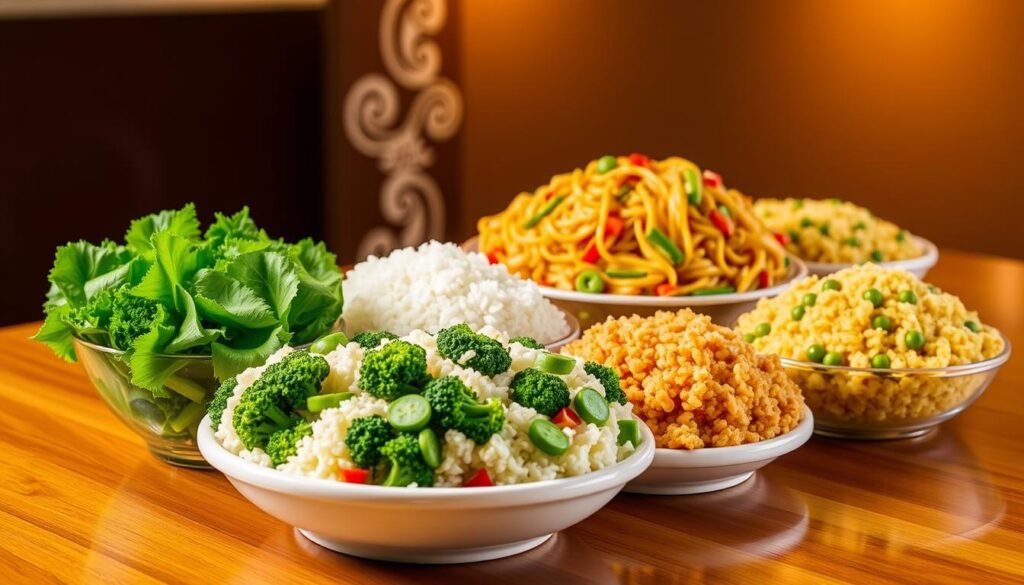
Sides decide whether a meal feels light or like an indulgence—choose them with as much care as the entrée. The same entrée can land very differently depending on whether you add greens, steamed rice, chow, or fried rice.
Best side for volume and fiber
Super greens is the top pick for volume and fiber. At 90 calories it has 3g fat, 10g carbs, 5g fiber, 6g protein, and 260mg sodium.
That fiber and low energy density help you feel full without adding a lot of carbs or fat. Pair it with saucy entrées to blunt sugar and fat spikes.
Most decadent sides
Chow mein is the most indulgent side at about 510 calories, with 20g fat and 80g carbs. Those calories come from both carbs and fat, so a plate can overshoot targets fast.
Fried rice sits close behind with similar nutrition. If you’re trying to stay lighter, note that rice isn’t always the safer choice unless it’s steamed and portion-aware.
Steamed white rice vs brown rice
Steamed white rice is simple and easy on digestion. It pairs well when you want a neutral base for bold flavors.
Brown rice offers extra fiber and is a better pick if you want slower carbs and more satiety.
- Make-or-break rule: a side can flip a meal’s totals—choose wisely.
- Side swap: high-calorie entrée = super greens; lighter entrée = small steamed rice.
| Item | Calories | Carbs | Fat | Why it matters |
|---|---|---|---|---|
| Super greens (side) | 90 | 10 g | 3 g | High fiber, low energy density |
| Chow mein | 510 | 80 g | 20 g | High carbs + fat; easy to overdo |
| Steamed white rice (small) | ~190 | 42 g | 0 g | Neutral base, portion matters |
| Fried rice | ~450 | 70–75 g | 15–18 g | Calorie-dense; similar to chow mein |
Desserts and Drinks: Fortune Cookie, Chocolate Chunk Cookie, Black Tea, and Soda
Desserts and drinks are the sneakiest way to add hundreds of extra calories after a plate and a side. A quick sweet or a large fountain soda can push your meal from balanced to indulgent. This short guide shows the easy wins so you can finish with flavor without derailing your totals.
Lowest-cal dessert
Fortune cookie: 20 calories, 5 g carbs, 2 g sugar. It’s the lightest sweet option and works when you want a taste of dessert without a big jump in totals.
Heavier sweet option
Chocolate chunk cookie: 160 calories, 7 g fat, 25 g carbs. This cookie adds both carbs and fat, so it feels filling but stacks quickly with a hearty entrée.
Best beverage choice
Black tea (small, 22 oz): 5 calories. Unsweetened black tea gives flavor with almost no energy impact. Compare that to a large fountain soda and the difference is dramatic.
- Quick point: Desserts and drinks can add hundreds of extra energy to a meal that already includes a side.
- If you pick a sweeter entrée, keep the drink unsweetened to avoid stacking sugar on sugar.
- Use the small fortune cookie when you want a tiny treat; choose black tea for a low-impact drink.
| Item | Calories | Carbs | Fat | Notes |
|---|---|---|---|---|
| Fortune cookie | 20 | 5 g | 0 g | Lowest-cal dessert, small sugar hit |
| Chocolate chunk cookie | 160 | 25 g | 7 g | Higher carbs and fat; more filling |
| Black tea (22 oz) | 5 | 0 g | 0 g | Best beverage choice for minimal impact |
| Barq’s root beer (large, 42 oz) | 560 | 153 g | 0 g | Example of how sugary drinks can outweigh an entrée |
Kids “Cub Meal” Nutrition: Smarter Picks for Little Appetites
Cub Meals are kid-sized portions of popular entrées. They look smaller, but sauces, sides, and drinks quickly change the total impact. Parents should still check nutrition details before ordering.
Better kids’ entrée choice
String bean chicken breast cub is the smarter pick for small appetites. At 140 calories it provides 11g protein, 3g fiber, and moderate fat (7g). Sodium is 440mg, so it stays reasonable for a single meal.
Less nutritious kids’ pick
Orange chicken cub is more indulgent. It has 355 calories, 16g fat, 36g carbs, 13g sugar, and 590mg sodium. The higher sugar and carbs can cause energy swings for kids.
- Think of a Cub Meal as a full meal—not a snack. Check sauces and sides.
- Choose a veggie-forward side and unsweetened drinks when possible.
- Share treats instead of ordering separate desserts to cut added sugar.
| Item | Calories | Protein | Sodium |
|---|---|---|---|
| String bean chicken breast cub | 140 | 11 g | 440 mg |
| Orange chicken cub | 355 | 18 g | 590 mg |
Quick tip: Build the full kid’s order in the online nutrition tool. Sides and beverages usually change the meal more than the entrée does.
Dietary Insights and Allergen Notes for Panda Express
Dining at quick-service restaurants can be simple if you plan. This short guide gives practical diet pointers and allergen facts so you can adapt orders with confidence.
Lower-carb ordering
Skip high-carb sides and favor vegetables and protein-forward entrées. Choose Super Greens, String Bean Chicken Breast, or Mushroom Chicken as the base of a lower-carb plate.
Build around those items and confirm totals in the online nutrition tool before you order.
Lower-sodium strategy
Sauces, marinades, and wok cooking drive sodium across many dishes. Even lighter-looking entrées can be high in salt.
- Pick vegetable-heavy items and avoid stacking multiple saucy items.
- Skip salty appetizers and choose water or unsweetened tea.
- Ask for sauces on the side to control how much you use.
Allergens and cross-contamination
Common allergens you should watch for include eggs, milk, soy, wheat/gluten, shellfish, peanuts, tree nuts, and sesame.
Cross-contact risk exists due to shared equipment and utensils. Those with severe allergies should review official allergen facts and speak to staff before ordering.
Vegetarian and vegan expectations
Dedicated vegan and vegetarian items are limited. Plan ahead by checking ingredient lists and combining vegetable entrées with sides to meet needs.
| Concern | Practical tip | Why it matters |
|---|---|---|
| Lower-carb needs | Choose vegetables + protein, skip rice/chow mein | Reduces carbs while keeping fullness |
| Sodium control | Ask for sauce on the side; pick greens | Sauces add most of the salt |
| Allergy safety | Check official allergen info; notify staff | Shared equipment can cause cross-contact |
Conclusion
Wrap up your plate with simple swaps and a quick check of nutrition totals to keep meals balanced.
Start with the entrée, pick a smarter side, then keep drinks and dessert low in sugar. That order helps you build a meal that fits energy and macro goals.
Best swaps to remember: choose Super Greens instead of chow mein, black tea over soda, and String Bean Chicken Breast instead of Orange Chicken when calories matter most.
Watch sodium closely—many items are high in salt even when calories look reasonable. Use the online nutrition builder before you order to confirm totals for the full meal.
Enjoy treats sometimes, but pair indulgent choices with vegetables and an unsweetened drink to keep the overall meal manageable and satisfying.