Run into Subway Salad Menu: Options, Prices, Calories
Looking for the updated subway salad menu with prices and calories? You’re reading the 2025 U.S. snapshot so you can order with confidence.
This intro gives a clear answer: it’s a current guide to popular salads, typical costs, and calorie ranges, with real NYC examples like Chicken & Bacon Ranch Salad $13.19 and Veggie Delite® Salad $10.79.
You’ll see what lineup is offered, how calories shift with cheese, dressings, and add-ons, and why skipping the bread keeps the filling while lowering carbs for a lighter meal.
What to expect: a quick price and nutrition snapshot, goal-based picks for low-calorie and high-protein choices, and practical tips like requesting dressing on the side to save calories and sodium.
Prices vary by location, so NYC often runs higher than other markets. The article uses published nutrition tables and real-world pricing to help you pick a healthy choice that fits your goals.
Why Choose Subway Salads for a Lighter Meal
Choosing a no-bread bowl trims carbs while keeping the flavors you enjoy. It’s a simple swap that fits lower-carb days and calorie-aware eating.
No-bread approach for fewer carbs and flexible needs
Skipping the bread cuts carbs quickly and keeps your macro profile lighter. This works well if your diet calls for fewer carbs or more protein.
Fresh ingredients basics
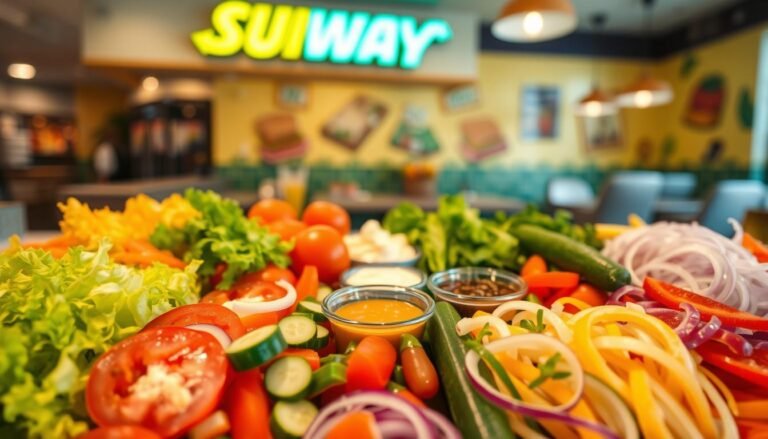
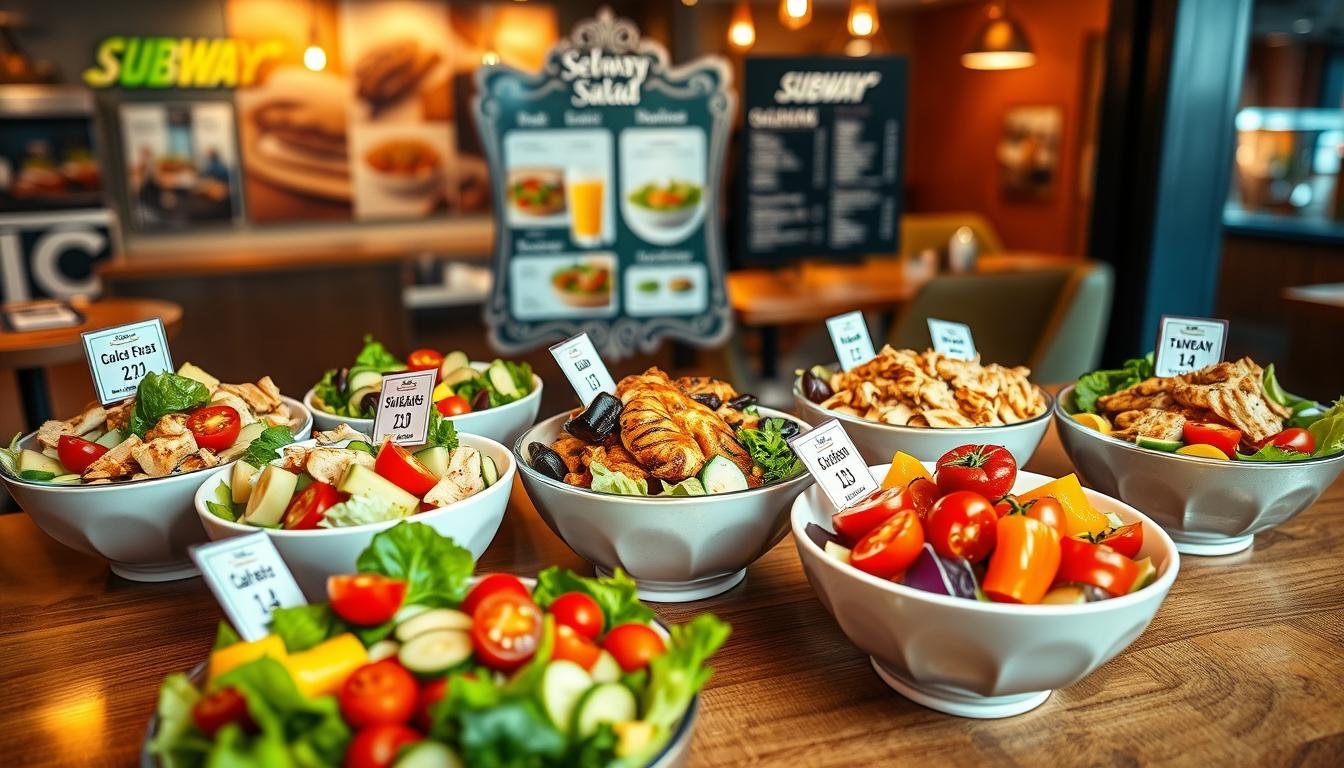
Expect crisp lettuce with classic toppings like tomatoes, cucumbers, and onions. Stores may add peppers, olives, and other fresh ingredients on request.
Who benefits most
These bowls suit people after high-protein lunches, low-calorie dinners, or balanced meals that still feel filling. Start with a lean protein, load veg, and use dressing sparingly.
Quick buyer-guide
- Watch cheese and dressing—these change calories fast.
- Many bowls are treated as gluten-free if ordered without croutons (store handling varies).
- Order dressing on the side to control portions.
| Feature | Benefit | Best for |
|---|---|---|
| No-bread bowl | Lower carbs, same fillings | Low-carb days |
| Veg-forward build | More fiber, fewer calories | Light, health-focused meals |
| Lean protein add | Keeps you full longer | High-protein needs |
Next: a quick snapshot of current options with typical prices and calories so you can compare fast.
Subway salad menu: Current Options, Prices, and Calories
Here’s a compact price-and-calorie snapshot to speed up your pick.
2025 snapshot: core choices
Below are common 2025 options with national prices and calories. Use this to spot lighter versus heavier picks at a glance.
| Item | Price (USD) | Calories | Quick note |
|---|---|---|---|
| Ham (Black Forest ham) | $8.59 | 120 | Lean, lower-calorie option |
| Italian B.M.T.® | $9.19 | 160 | Italian-style meat trio flavor |
| Turkey Breast | $9.19 | 120 | Classic lean breast choice |
| Tuna | $9.19 | 310 | Higher calories due to mayo |
| Veggie Delite® | $7.99 | 50–70 | Lowest-calorie starter; dressings add more |
Chicken picks and where they fit
The Oven Roasted Chicken is a protein-forward, lower-calorie choice (about 130 kcal). It’s practical when you want more protein without a big calorie jump.
Sweet Onion Chicken Teriyaki runs higher (about 240 kcal) because of the sweet glaze. Choose it for flavor-forward meals when calories are less of a concern.
Heartier and veggie-forward options
For bigger appetites, Steak & Cheese Salad, Roast Beef, and the Subway Melt® offer more satiety but often add sodium and fat once cheese or sauces are included.
The Veggie Delite® Salad is the simplest, lowest-calorie base. Tip: dressings and cheese change totals quickly, so order dressing on the side if you want to control calories.
- Light picks: Veggie Delite®, Turkey Breast, Ham.
- Heavier pick by calories: Tuna.
Prices vary by store and city; NYC often runs higher than the national examples above. Pick 2–3 candidates now and refine them with the full nutrition facts in the next section.
Best Subway Salads to Buy Based on Your Goal
Pick your bowl by goal—weight control, fullness, or flavor—and order with confidence.
Best low-calorie options for weight management
For a low-calorie choice, start with Veggie Delite® (50–70 calories). Turkey Breast (120) and Ham (120) are next-best picks.
The Oven Roasted Chicken (~130) gives more protein while keeping calories modest. Tip: skip heavy cheese and ask for dressing on the side to keep totals low.
Best lean protein choices for staying full longer
When fullness matters, pick lean protein. Turkey breast and Oven Roasted Chicken offer solid protein per calorie.
Consider double protein if you need extra staying power; it boosts satiety without too many extra carbs.
Best flavor-forward combinations for cravings
Craving bold taste? Choose Sweet Onion Chicken Teriyaki for sweet-savoury notes or an Italian-style combo for zesty, meat-forward flavor.
Add peppers, onions, and a tangy vinaigrette for a satisfying combination that still lets you control calories.
- Order like a pro: add extra non-starchy veggies for volume, pick lighter dressings, and be intentional with cheese.
- Buyer’s guide: your best choice depends on the day—light lunch, post-gym, or comfort meal.
| Goal | Top Picks | Typical Calories | Why it works |
|---|---|---|---|
| Low-calorie | Veggie Delite®, Turkey, Ham | 50–120 | Lowest calories; easy to manage with dressing on side |
| High satiety | Turkey Breast, Oven Roasted Chicken | 120–130 | Lean protein keeps you full longer |
| Flavor craving | Sweet Onion, Italian-style | 160–240 | Bold sauces and meats deliver strong flavor |
Next: a nutrition comparison will show protein versus calories and highlight sodium, a common hidden issue to watch.
Nutrition Facts That Matter: Calories, Protein, Carbs, Fat, Fiber, Sodium
A simple lens—calories versus protein—helps you pick bowls that match hunger and health goals.
Look at protein per calorie to judge how filling an option will be. For example: Turkey Breast gives 11g protein at 120 calories, while Tuna delivers 18g protein at 310 calories. This shows efficiency versus total energy.
Skip the bread and carbs fall sharply. Fiber then depends on how many veggies you add. More greens raise fiber without many calories.
Sodium is a key health variable. High sodium can affect blood pressure, so note items like the Italian B.M.T.® at 800mg.
Dressings and sauces change the totals fast. Creamy, sugary sauce options add calories and salt. Cheese adds fat and calories but can boost satisfaction.
- Buyer tip: start with a lean protein base, add veggies, then “spend” a measured dressing for flavor.
| Item | Calories | Protein (g) | Sodium (mg) |
|---|---|---|---|
| Turkey Breast | 120 | 11 | 460 |
| Oven Roasted Chicken | 130 | 13 | 480 |
| Ham | 120 | 8 | 500 |
| Italian B.M.T.® | 160 | 10 | 800 |
| Tuna | 310 | 18 | 700 |
Next: the chicken deep-dive will show which chicken choices hit protein goals without large calorie jumps.
Chicken Salad and Chicken-Topped Salad Options at Subway
Choosing the right chicken changes both the taste and the nutrition of your bowl.
Rotisserie-style chicken vs. grilled/oven-roasted chicken: taste and nutrition tradeoffs
Oven-roasted or grilled chicken is the cleaner, lighter baseline. It keeps calories lower and tastes freshly grilled.
Rotisserie-style chicken leans richer and more savory. It often feels juicier and more comfort-food forward.
Popular chicken directions: classic, buffalo-style, and teriyaki-inspired flavor
Classic builds pair chicken with lots of veggies for a filling yet lean bowl. Buffalo-style adds heat and a tangy kick.
Sweet Onion Chicken Teriyaki is the sweet-savory route and shows how sauce raises calories—Sweet Onion Chicken Teriyaki Salad costs about $11.59 and runs ~240 cal.
How chicken choices support healthy choices and high-protein meals
For a high-protein, lower-calorie meal, pick Oven Roasted Chicken Salad ($10.19, ~130 cal) and limit sauce.
Ordering cues: ask for sauce on the side, add crunchy veggies for volume, and skip or choose cheese intentionally.
Remember: a chicken-topped salad can start from a veggie base and become a more filling, protein-forward bowl.
| Item | Price (USD) | Calories | Protein (g) | Notes |
|---|---|---|---|---|
| Oven Roasted Chicken Salad | $10.19 | 130 | 13 | Lean, high-protein baseline |
| Sweet Onion Chicken Teriyaki Salad | $11.59 | 240 | 15 | Sweet glaze raises calories |
| Rotisserie-style chicken option | $10.99 (varies) | 160–200 | 14 | Richer, juicier flavor profile |
Next you’ll see ham, turkey, and Italian-style choices so you know what those proteins typically imply.
Ham, Turkey Breast, and Italian-Style Salads: What You’re Really Ordering
These three protein choices show you what to expect at the counter so you can order fast and confidently.
Black Forest ham and classic ham expectations
Black Forest ham appears as thin, smoky slices laid over greens and fresh veggies. It’s a simple, savory choice that keeps calories modest—about $8.59 and 120 calories as a bowl option.
That makes ham a reliable, lighter pick compared with heavier builds. It tastes familiar if you often pick a cold cut sandwich and want the same flavor without bread.
What italian b.m.t.® style brings
The italian b.m.t.® mixes Genoa salami, pepperoni, and Black Forest ham over your greens. This trio delivers bold, deli-style flavor and typically raises sodium and calories to about 160 kcal and $9.19.
Buyer tip: love the zesty deli vibe? Balance it with extra veggies and a lighter dressing to keep the bowl from feeling too heavy.
Turkey breast as the lean choice
Turkey breast is the go-to lean protein. It’s low-fat, high-protein, and runs about $9.19 and 120 calories. Choose it when you want a clean, mild taste that fits most goals.
- Turkey: clean and mild—best for low-calorie needs.
- Ham: classic savory—good when you want familiarity.
- Italian B.M.T.®: bold deli flavor—use veggies and light dressing to temper richness.
| Item | Price (USD) | Calories | Notes |
|---|---|---|---|
| Ham (Black Forest ham) | $8.59 | 120 | Smoky, familiar deli slices |
| Italian B.M.T.® style | $9.19 | 160 | Genoa salami + pepperoni + Black Forest ham; bolder, saltier |
| Turkey Breast | $9.19 | 120 | Lean protein, low-fat option |
These proteins mirror what you’d find in a sandwich but in bowl form. Next, learn how to customize toppings, cheese, and protein add-ons to build your best bowl.
Build Your Best Bowl: Ingredients, Toppings, Cheese, and Protein Add-Ons
Start with a full bed of greens and add focused ingredients to match your day. This fast method cuts decision time and keeps the bowl balanced.
Base greens and veggie stack
Begin with lettuce or a mixed leaf base. Layer tomatoes, cucumbers, and onions for freshness.
Add crunchy extras like peppers or olives to increase volume without many calories. These toppings fill you up fast.
Protein strategy
Choose single protein for lighter lunches. Pick double protein after workouts or long workdays.
Mix lean options with one flavorful protein for a balanced combination that avoids heavy sauces.
Cheese choices and impact
Cheese adds flavor but raises calories and fat. Use a small amount as an accent rather than a default.
Crunch, heat, and flavor boosters
Pickled peppers, jalapeños, or pepperoncini give heat without extra carbs. A sprinkle of lemon or herbs lifts flavor without calories.
Smart swap phrases: “extra veggies,” “light cheese,” “sauce on the side,” or “double protein, please.”
- Quick build: Base → Protein → Light cheese → Veggie boosters → Sauce on side.
| Item | Role | Why it helps | Order tip |
|---|---|---|---|
| Lettuce / greens | Base | Low-calorie volume | Ask for a full bed |
| Tomatoes, cucumbers, onions | Toppings | Freshness and fiber | Add all for bulk |
| Lean protein | Fills you up | Protein with fewer calories | Single or double as needed |
| Cheese & spicy picks | Flavor boost | Increases calories; adds taste | Use sparingly; pick spice over sauce |
Next: dressings and sauces make the biggest calorie swing, so learn how to keep flavor high without blowing your target.
Dressings and Sauces: Biggest Calorie Swing in Your Salad
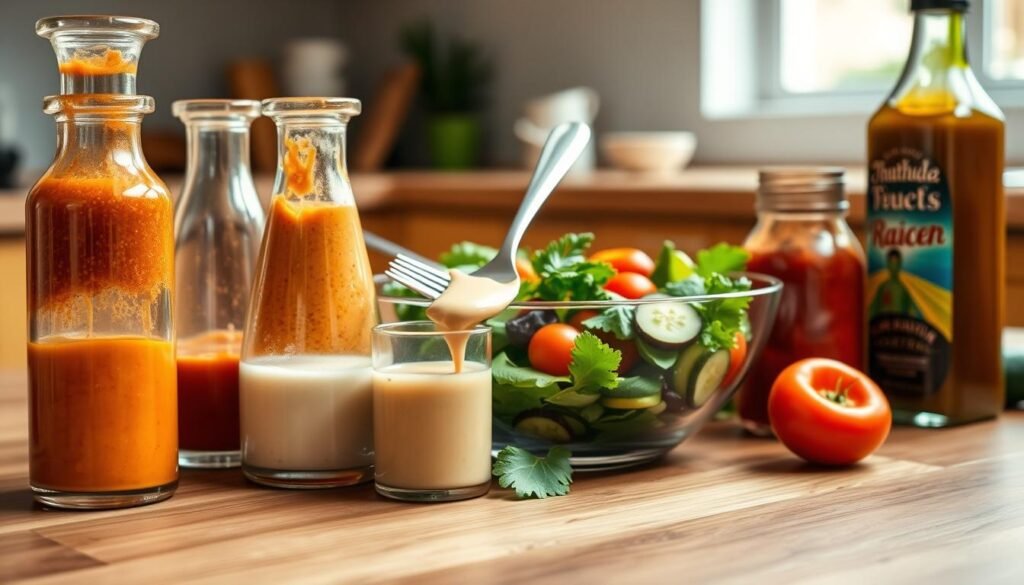
Dressing choice alone can flip a light bowl into a high-calorie meal in seconds. The base—greens and lean protein—stays mostly the same. What changes most is the sauce and how much of it you use.
Choosing lighter dressings vs. creamy sauces
Vinaigrette-style dressings tend to be lighter. They are oil + acid and add flavor with less fat per tablespoon.
Creamy sauces are richer and easier to over-pour. They add calories and sodium quickly even in small amounts.
Order tactic: dressing on the side
Ask for dressing on the side when ordering, especially for delivery. This gives you control and prevents extra squirts that often happen in transit.
Dip your fork or drizzle slowly. Taste as you go and stop when the bowl is flavorful—not swimming in sauce.
Flavor pairings that work
- Italian-style bowls: pair well with tangy, herb-forward vinaigrettes.
- Sweet onion profiles: deliver sweet-savory flavor; use sparingly because sweetness often hides extra sugar and calories.
- Bold craving fix: pick one signature sauce and keep cheese and extras light to avoid stacking calories.
| Choice | Typical effect | Order tip |
|---|---|---|
| Vinaigrette | Lighter, tangy | Dress lightly; add herbs |
| Creamy sauce | Higher calories, richer | Request small side portion |
| Sweet-glaze sauces | Sweet-salty, calorie-dense | Use as a single flavor accent |
Don’t waste calories: choose one sauce you love and skip multiple sauces plus extra cheese. If weight control is the goal, prioritize measured vinaigrette and portion control. If flavor is the goal, pick one bold sauce and simplify the rest.
Next up: once you know how to dress your bowl, the obvious follow-up is cost—what that choice will mean for price in the United States.
How Much Does a Subway Salad Cost in the United States
Many options cluster around $8–$12, with pricier choices in big cities.
Typical price range using listed menu examples
Typical national range: base bowls often start at about $7.99 (Veggie Delite®) and go up to $11.59 for flavored chicken bowls like Sweet Onion Chicken Teriyaki. Most choices fall between $9.19 and $10.19 depending on protein.
Why NYC pricing can be higher
In New York City expect higher tags. Examples: Chicken & Bacon Ranch and The Philly run near $13.19, while Veggie Delite® clocks about $10.79. Higher rent, labor, and local costs drive this gap.
Value tips: bowls vs. salads, and catering savings
- Bowls vs. sandwiches: bowls remove bread but keep fillings—compare calories and portion to judge value versus a sandwich.
- Add-on costs: double protein, cheese, and extra sauces raise the final price quickly.
- Group orders: catering or platters often lower per-person cost for office lunches or events.
| Range | Common Price | NYC Example | Why it varies |
|---|---|---|---|
| Budget | $7.99–$9.19 | $10.79 (Veggie) | Simple proteins, fewer add-ons |
| Mid | $9.19–$10.99 | $11.59 (Sweet Onion) | Protein-forward, common add-ons |
| High | $11.59–$13.19+ | $13.19 (Philly/Chicken & Bacon) | Premium proteins, city pricing |
Quick buyer tip: check the store price in the app before you build your order to match your budget and meal needs. Next is a short conclusion to help you pick a bowl that fits nutrition and cost.
Conclusion
End your decision stress with one repeatable formula that balances flavor and nutrition.
Skip the bread if you want a lighter meal and customize ingredients to match your needs. Pick a lean protein, pile on veggies, choose cheese sparingly, and keep dressing measured to control calories.
For low-calorie days, favor veggie-forward salads. For lasting fullness, choose chicken or a chicken salad-style build with extra protein. Watch creamy dressings and extra sauces—they’re where calories jump.
Prices usually fall in a national range, but NYC locations can run higher—plan accordingly. Quick in-store checklist: confirm protein, confirm dressing choice, decide on cheese, then finalize toppings.
You can enjoy Subway salads as a smart alternative to a sandwich when you want freshness, control, and flexibility.