Texas Roadhouse Allergen Menu: Detailed Guide
Texas Roadhouse Allergen Menu gives a clear starting point for diners managing food allergies. It lists common ingredients and notes where allergens may appear.
This guide explains what the restaurant can and cannot promise. Ingredient lists are helpful, but they are not a guarantee of safety. Kitchens share prep and cook spaces, so cross-contact can happen even when an item does not contain a listed allergen.
Read on to learn how to use this resource at any U.S. location. You’ll get a step-by-step ordering strategy, watch-outs like butter on grilled proteins, dairy in breads, and soy oil used widely in cooking.
Who this helps: guests with diagnosed food allergies, parents ordering for kids, and diners with sensitivities who still want a steakhouse meal. The next sections give practical examples and plain modifications to reduce risk and help you plan a safer, confident dining experience.
How the Texas Roadhouse allergen menu works in the United States
Understanding how the chain marks common triggers helps you scan options fast. The guide is organized by category and by item, with clear callouts for ingredients you should watch.
What the coverage includes
The list flags the “big eight”: dairy, soy, wheat/gluten, eggs, peanuts, tree nuts, fish, and shellfish. Each row notes whether an item contains the ingredient by recipe.
Why “allergen-free” isn’t a guarantee
Items marked as free of a given trigger may still face cross-contact. Shared grills, fryers, and prep surfaces create risk in busy kitchens.
- Scan categories first to spot likely trouble: breads, fried items, sauces.
- “Doesn’t contain” means the recipe lacks that ingredient, not that the plate is sterilized.
- If your reaction risk is high, use the list as a starting checklist and confirm prep steps with staff.
| How to use it | Quick action | Why it matters |
|---|---|---|
| Find item category | Check callouts | Speeds safe choices |
| Note “allergen-free” labels | Ask about prep | Reduces cross-contact risk |
| Confirm location-specific details | Verify with staff | Suppliers and recipes vary by region |
Where to find the latest allergen menu PDF and ingredient updates
Updated ingredient lists move fast—here’s where to find the latest version. Start online at the official site for current PDFs and posted changes. Then confirm details in person when you arrive.
How to request the current in-store guide from staff
Ask your server for the printed allergen guide right away. If your sensitivity is severe, request to speak with a manager.
- Show the server your question and get a clear answer about prep.
- Ask staff to confirm the guide date and any recent ingredient swaps.
- If substitutes are used, request the exact ingredient list for that item.
When to re-check: seasonal items, supplier changes, and location differences
Re-check the guide each visit. Seasonal specials, limited-time items, and supply shortages often change ingredients or options.
Corporate recipes help consistency, but ownership and local sourcing can alter sauces, buns, and seasoning blends. Confirm the version and ask what changed since your last visit.
| Where | Best action | Why it matters |
|---|---|---|
| Official website | Download PDF | Fastest source for updated ingredients |
| In-restaurant | Ask server/manager | Confirms location differences at ordering time |
| At re-order time | Verify date/version | Protects repeat guests from unnoticed changes |
Step-by-step ordering strategy for food allergies and sensitivities
Have a short plan before you sit down. Tell the server your condition, name the ingredient, and say how severe your reaction can be. This helps staff and the kitchen act clearly.
What to say at the table
Use a simple script: “I have a severe allergy to [ingredient]. Cross-contact causes me harm. What can the kitchen do today?”
Ask for a manager if you face multiple allergies, anaphylaxis risk, or need a separate pan. A manager reduces miscommunication and confirms steps.
How to order “plain” to reduce risk
- Request no butter or brush finish on grilled items.
- Keep all sauces and toppings on the side or skip them.
- Avoid unknown seasoning blends; ask about ingredients.
Building a safer plate and prep questions
Pair a straightforward protein—steak, grilled chicken, or pork—with simple sides like steamed vegetables or plain potatoes.
| Action | Question to ask | Why it helps |
|---|---|---|
| Separate pan | “Can you cook this in a clean pan?” | Limits cross-contact from prior items |
| No butter finish | “Is butter brushed on the grill?” | Removes a common dairy source |
| Clean tools | “Will clean tongs/utensils be used?” | Prevents shared-contact with fried or breaded foods |
Order early when the kitchen is less busy and ask the server to confirm “no butter, no sauce, no topping” before the plate leaves the kitchen.
Cross-contact and shared equipment risks to know before you order
Shared cooking surfaces and tools can move trace ingredients from one plate to another. In real restaurant terms, an ingredient may be absent from a recipe but still transfer via a hot grill, utensil, or fryer.

Shared grills and fryers: why cross-contact can happen even with “safe” ingredients
Steakhouses often cook proteins and buns close together. Butter basting can spread dairy across a surface and land on an otherwise plain steak or chicken.
Fryers are another hotspot. Breaded appetizers or seasoned sides can leave residues in oil that touch fries or other fried items.
High-risk kitchen realities: butter on grilled items and soy oil prevalence
Many kitchens use butter for flavor finishes and soy oil for high-heat cooking. Both show up in unexpected places beyond marinades.
- Ask if fryers are dedicated or shared.
- Request a clean pan or separate tongs.
- Confirm whether butter is applied automatically.
| Risk | Why it matters | Ask before ordering |
|---|---|---|
| Shared grill | Cross-contact from adjacent items | “Can you grill separately?” |
| Shared fryer or oil | Residue from breaded food | “Is the oil shared?” |
| Butter/soy use | Automatic basting or cooking oil | “Do you use butter or soy oil on this?” |
Common allergens at Texas Roadhouse and where they show up most
A quick map of likely ingredient hotspots helps you avoid surprises at the table. Use this short guide to spot the highest-risk items before you order.
Dairy hotspots
Butter is used often for grilling and finishing steaks, chicken, pork, and seafood. Ask to skip any brush or baste.
Cheese toppings, creamy sauces, mashed potatoes, and the signature rolls commonly contain milk. Point these out when ordering.
Wheat and gluten hotspots
Table bread, rolls, and burger buns contain wheat and often milk. Fried items with batter and some sauces can hide gluten.
Au jus and brown gravy may include wheat—confirm ingredients before choosing those sauces.
Soy hotspots
Soy appears in marinades, BBQ-style sauces, and as soybean oil used for high-heat cooking. If soy is a concern, ask about oils and sauce bases.
Eggs, nuts, and seafood: where to watch
Eggs can show up in dressings and coatings. Tree nuts are more likely in desserts or specialty salads.
Peanuts may be present in the dining area from complimentary snacks. Fish and shellfish require extra caution due to shared surfaces.
- If dairy is your trigger: start by avoiding butter, cheese, creamy sauces, and rolls.
- If gluten is your trigger: avoid breading, buns, gravies, and au jus unless confirmed safe.
- If soy is your trigger: check marinades, BBQ sauces, and the oil used for cooking.
| Hotspot | Common items | What to ask |
|---|---|---|
| Dairy | Butter-basted proteins, mashed potatoes, rolls | “Is butter used to finish or in the side?” |
| Wheat/Gluten | Buns, fried foods, gravies | “Does this include breading or flour-based gravy?” |
| Soy | Marinades, BBQ sauce, cooking oil | “What oil and sauce ingredients are used?” |
Using the texas roadhouse allergen menu to choose safer starters, salads, and sides
Start by focusing on starters, salads, and sides that are easiest to customize at the table. This narrows choices and makes it simpler to ask for safe prep.
High-risk starters to watch
Many popular starters use batter, cheese, and shared fryers. Fried Pickles, Rattlesnake Bites, Boneless Buffalo Wings, and the Cactus Blossom commonly contain eggs, milk, soy, and wheat.
Ask if fried items share oil with seafood or breaded foods before ordering.
Salad ordering tips
Order the House Salad without cheese or croutons to cut dairy and gluten. Choose Oil & Vinegar or request dressing on the side.
Note that some dressings contain eggs; confirm which dressings are egg-free before pouring.
Sides and extras to scrutinize
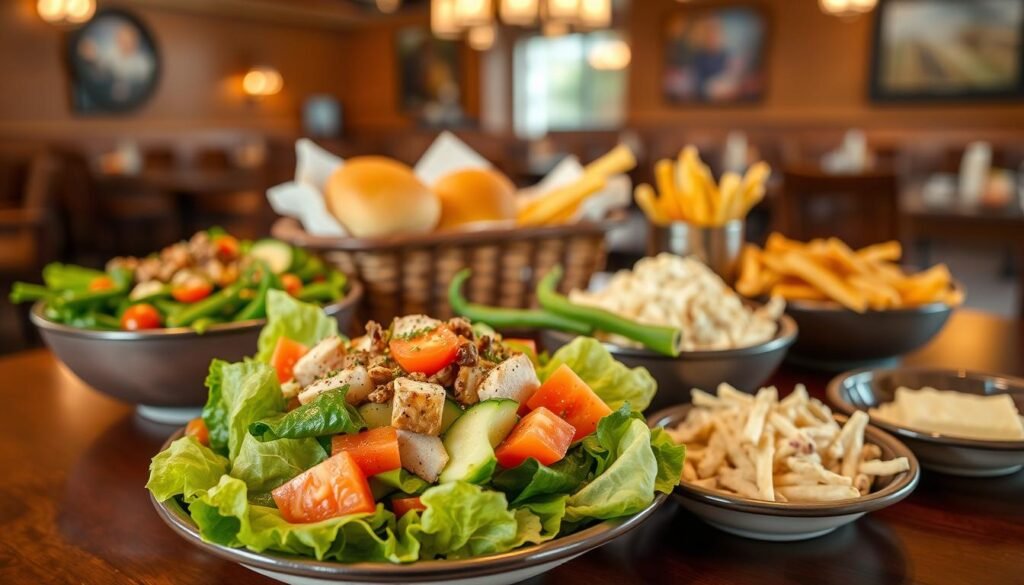
Seasoned Rice, the chili base, and steak fries seasoning often list milk, soy, or wheat. Fresh Vegetables may be cooked with butter unless you request otherwise.
For safer sides, pick apple sauce or a plain baked potato and ask for no butter or sauce.
| Item (Entity) | Price (Attribute) | Calories (Attribute) | Vegan/Keto/Gluten-Free Options | Allergens |
|---|---|---|---|---|
| Fried Pickles | $6.99 | Not listed | Not vegan; not gluten-free; not keto | Egg, Milk, Soy, Wheat |
| Rattlesnake Bites | $8.99 | Not listed | Not vegan; not gluten-free; not keto | Egg, Milk, Soy, Wheat |
| Boneless Buffalo Wings | $7.99 | Not listed | Not vegan; not gluten-free; not keto | Egg, Milk, Soy, Wheat |
| Cactus Blossom | $7.99 | Not listed | Not vegan; not gluten-free; not keto | Egg, Milk, Soy, Wheat, Fish (one source) |
| House Salad (no cheese, no croutons) | $4.99 | Not listed | Can be vegan with Oil & Vinegar | Customizable; dressings may add Egg or Milk |
Allergen-aware entrée picks: steaks, chicken, pork, ribs, and seafood
Choosing a main course gives you the most control over ingredients and cooking steps. Entrées are often the best place to reduce risk because you can request plain prep more easily than with breaded starters.
Hand-cut steaks: no butter and sauce choices
Pick your cut and ask for it cooked plain. Say “no butter on the grill or finish” and keep steak sauces on the side.
Steak sauces, au jus, and gravies can add soy, wheat, or dairy. Confirm ingredients before adding them to the plate.
Grilled chicken and pork chops: BBQ and seasoning notes
Grilled chicken and pork often get a brush of bbq sauce or a seasoning blend. BBQ can contain soy and sometimes wheat.
Order plain or request sauce on the side to control what touches your protein.
Ribs: soybean oil warning
Ribs may be finished or grilled using soybean oil. If you have a soy sensitivity, ask the kitchen about current prep and consider avoiding ribs if they cannot confirm a safe oil.
Dockside choices: grilled vs fried seafood
Grilled fish still may be finished with butter or soy-based glaze. Fried catfish and shrimp bring batter risks from eggs and wheat.
For safer pairings, choose a plain baked potato and steamed vegetables with no butter.
| Item | Safe Prep Tip | Common Allergens |
|---|---|---|
| Hand-cut steaks | No butter, sauces on side | soy, dairy |
| Grilled chicken | Plain or sauce on side | bbq (soy/wheat) |
| Ribs | Confirm oil, avoid if soy present | soy |
| Grilled salmon / Fried catfish | Grill without butter; avoid batter | fish, eggs, wheat, soy |
Dairy-free and gluten-friendly approaches that still feel like a Texas Roadhouse meal
Simple swaps and clear requests keep a hearty steakhouse meal within reach. Use a short checklist to reduce risk and keep flavor.
Dairy-free ordering checklist: what to avoid and what to swap
- Skip rolls and table bread; they often contain milk.
- Ask for no butter on the grill and no buttery finishes.
- Avoid creamy sauces and the chili base that may include dairy.
- Swap butter for lemon, pico de gallo, or a drizzle of safe oil.
Gluten-friendly checklist: breads, battered items, and sauce callouts
- Avoid bread, battered starters, and fried coatings.
- Confirm if au jus, gravy, or sauces contain wheat before adding them.
- Remember “gluten-friendly” is not certified gluten-free; cross-contact risks remain.
Vegan-leaning options and nut awareness
Choose a house salad (no cheese, no croutons) with oil & vinegar, plain baked potatoes, or steamed vegetables with no butter.
Ask about room practices: complimentary peanuts may be present, so guests with severe nut or peanut sensitivity should alert staff.
| Build-your-plate | Why it works | Allergy note |
|---|---|---|
| House salad + plain baked potato + steamed broccoli | Simple, filling, and avoids common dairy and wheat sources | Request no butter; confirm oils and dressings |
Conclusion
Wrap up your planning with key actions that reduce cross-contact risk every visit.
The texas roadhouse allergen menu is a useful guide, but it works best with clear communication. Tell staff your allergies, ask for a manager when needed, and confirm ingredients and prep before ordering.
Re-check items each visit—recipes and suppliers change. Skip butter finishes, keep sauces on the side, avoid fried starters, and pick plain, predictable sides to lower risk.
You can still enjoy steakhouse food in the United States when you order with a plan and rely on staff to verify ingredients and safe prep.